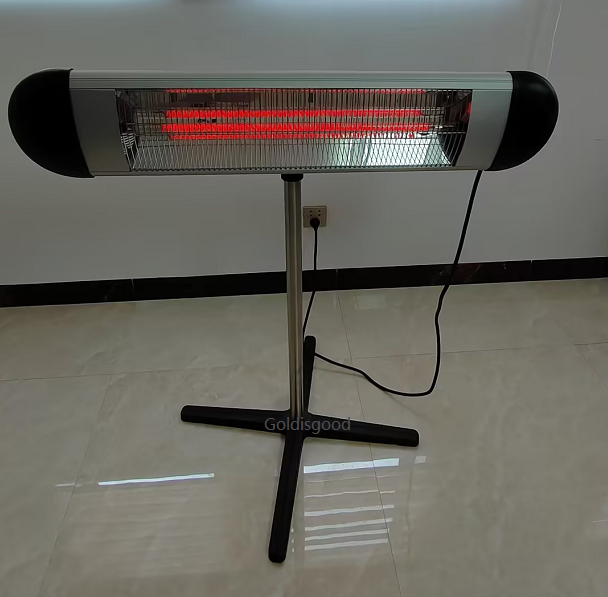
Keeping it Warm (and Safe) with IP66 Heaters
When you’re designing infrared heaters for a bathroom or an outdoor spot—especially if babies are in the mix—you’ve got a tricky problem. It isn’t just about getting the temperature right. It’s about the light. Most standard short-wave lamps blast out a spectrum that’s just too harsh. If you’ve ever looked at one, you know that blinding glare. For an infant who can’t look away or shield their eyes, that’s a real problem for their retinas. The fix? We change how the light behaves. We use special quartz coatings or filtered envelopes to basically “trim” the visible light and UV rays. By narrowing the spectrum to a softer infrared range, the lamp sends heat straight to the skin without the blinding flash. It’s simple physics: we push the energy out of the visible range and into the long-wave or mid-wave bands. The result is a warmth you feel, but not a light that hurts. Then there’s the water. If you’re putting a high-wattage lamp in a wet area, you need an IP66 rating. But you can’t just throw a plastic cover over the bulb and call it a day. That’s how things short out. We use high-temp gaskets and sealed cable glands to make sure dust and high-pressure water jets stay far away from the electrical terminals. But here’s the trade-off. When you filter out the light to protect those eyes, you lose that bright “glow” you see in cheap halogen bulbs. It doesn’t look as flashy. The heat is still there—it’s just more focused on warming people up rather than lighting up the room. Because of that, you have to be careful with your housing materials. All that thermal energy has to go somewhere. If your ventilation is bad, the housing is going to soak up that heat fast. It’s a balancing act, but it’s the only way to do it right.