
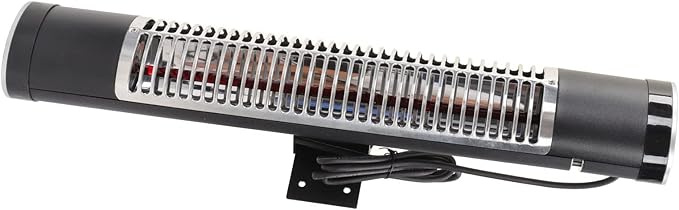
Why Your Infrared Heater Actually Fails (And How to Stop It)
Most people think an IP44 infrared heater dies because the heating element burns out. But honestly? That’s rarely the case. Usually, the real trouble starts right where the lead wires enter the housing. In a high-heat environment, standard seals just can’t keep up. They shrink. They crack. And once that happens, dust and moisture start sneaking in. Before you know it, you’ve got carbon tracking and a short circuit that kills the whole unit.
The “Baking” Problem
I’ve seen this happen a thousand times with cheap builds. The insulation on the lead wires basically bakes. Here’s the thing: when you’re running a heater at full blast, the heat doesn’t just go forward. It travels backward along the copper wire. If the sealing material isn’t built for that kind of constant heat, it turns brittle. It becomes like a cracker—one little movement and it snaps. A lot of “commercial grade” seals are just simple rubber gaskets. They aren’t enough. We use OEM-grade compounds that stay flexible. Why? Because metal expands and contracts as it heats up. If the seal doesn’t move with the metal, it creates a gap. And that tiny gap is exactly where your short circuit begins.
Doing it Right (The Hard Way)
Standard assembly usually ignores “wire creep.” We don’t. We spec our lead-wire entries with reinforced potting compounds. Think of it as a physical wall. It stops moisture from being sucked into the electrical terminals through capillary action. It’s the difference between a seal that looks good on a spec sheet and one that actually works. A cheap seal might pass a spray test on day one, but it’ll crumble after 500 hours of heating and cooling. Our process is built to handle thousands of those cycles without breaking a sweat.
The Balancing Act
Now, you can’t just plug every single hole. If you seal a heater too tightly, the internal pressure builds up as the air expands. You could actually push the lead wires right out of the housing. We spend a lot of time balancing that tightness with the right venting. It’s a bit of a science. One last tip: if you’re installing these in a high-humidity plant, double-check your cable glands. Make sure they match the heater’s specs. If they don’t, you’re just creating a weak point at the junction box, and all that high-end sealing inside the heater won’t mean a thing.