
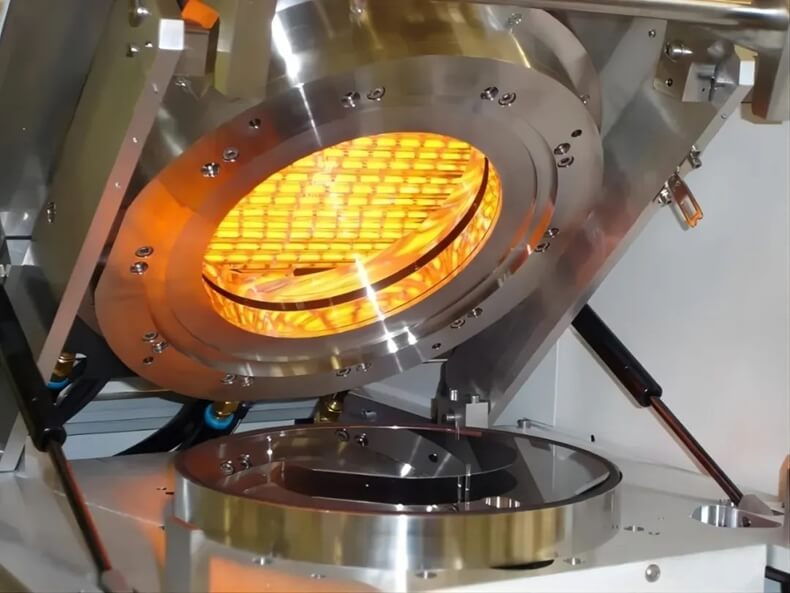
Let’s Talk About Keeping Your Ozone-Free IR Lamps Safe
Most people focus on the “ozone-free” part of these lamps—getting rid of that 185nm wavelength is great. But if we’re being honest, the spectral shift doesn’t matter much if your heating tunnel catches fire or blows a fuse. The real secret is the electrical integrity of the tube.
Why we test every single lamp
We don’t do “spot checks.” That’s a gamble I’m not willing to take with your equipment. Every single lamp we ship goes through a full voltage withstand and insulation test. Here is why: high-wattage IR lamps usually fail at the seal-to-electrode interface. It could be a tiny, invisible crack in the quartz or a speck of dirt on a lead-in wire. You won’t see it when the lamp is cold. But once it hits operating temperature? That’s when you get an arc-over. By hitting the insulation with a high-voltage stress test at the factory, we force those hidden flaws to show themselves. It means when you plug the lamp in, the power stays exactly where it belongs—in the filament—instead of jumping to your lamp holder or the machine chassis.
The tug-of-war between heat and voltage
To keep your production moving, these tubes often run at high power densities. The problem is that higher voltage makes dielectric breakdown more likely. If you’re running a high-voltage setup, double-check your lamp holders. They need to be rated for the same voltage as the tube. If you use cheap or underrated connectors, you’ll end up with carbon tracking and a burnt-out system. It’s just not worth the risk.
A few tips for the shop floor
The good news is these are drop-in replacements for your standard short-wave tubes. They fit right in. But there’s a catch. Ozone-free quartz is treated differently, soplease use gloves. I know it seems like a small thing, but the oil from your fingerprints creates hot spots on the glass. As the lamp heats up and cools down, those spots cause the quartz to stress and eventually crack. Keep them clean, make sure your reflectors are lined up straight, and let our insulation testing handle the rest. Your breakers will thank you.