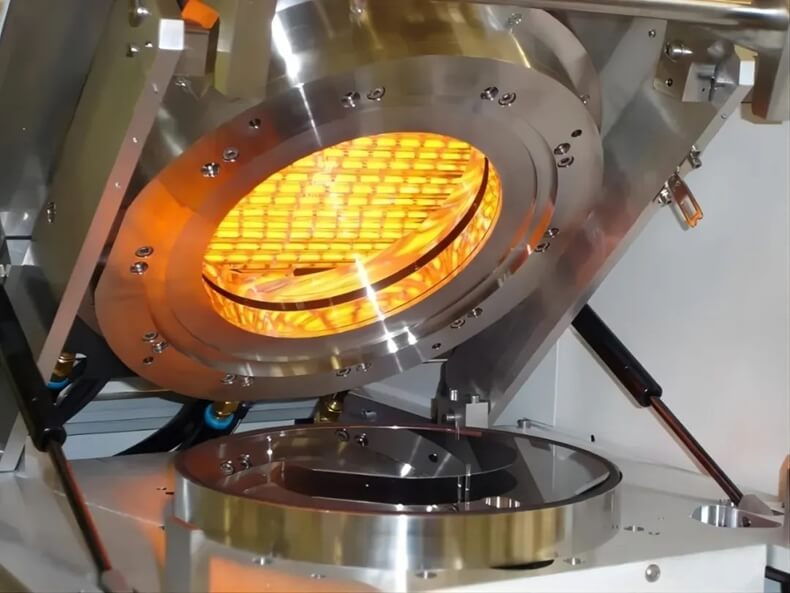
Stopping the Heat Leak in Your Semi Tooling
Here’s the problem with putting IR lamps inside a semiconductor chamber: physics doesn’t care about your equipment. Heat radiates in every single direction, but your workpiece is just a tiny speck in that space. If you don’t have a way to steer that energy, it just bounces around and hammers the inner walls of your machine. Pretty soon, your chassis is overheating, and you’ve got a serious safety problem on your hands when someone touches the outside of the tool. No one wants to deal with a machine that’s hot enough to burn an operator.
Getting the Heat Where it Actually Belongs
We use high-purity aluminum reflectors to fix this. Think about it—a raw IR lamp is basically wasting half its power by firing it backward. That’s a lot of expensive energy gone to waste. By pairing the lamp with a precision-curved aluminum housing, we can catch those backward-traveling photons and shove them back toward the target. We stick with aluminum because it’s great at reflecting infrared. We shape these reflectors to tighten the beam into a cone. It makes the heat hit the wafer or substrate harder, while the rest of the enclosure stays nice and cool.
The Trade-offs (Because Nothing is Perfect)
You can’t just wrap a piece of foil behind the lamp and call it a day. The shape of the curve changes everything. Go with a deep parabolic curve? You get a super concentrated beam. But there’s a catch: your effective heating area gets much smaller. It’s a balancing act. And here is something to watch out for: while the reflector saves your machine walls, it puts a ton of stress on the lamp’s mounting brackets. If you’re pushing high wattage, make sure your hardware can take the heat. If you cut corners here, your reflector will warp over time, and you’ll be right back where you started.
Keeping Things Safe
The best part about directional heating is that you don’t need those massive, clunky cooling jackets on the equipment shell. When the energy stays on the part, you get rid of those scary “hot zones” on the machine’s skin. It keeps the footprint clean. Plus, your operators can actually do their jobs and perform manual interventions without worrying about getting burned.