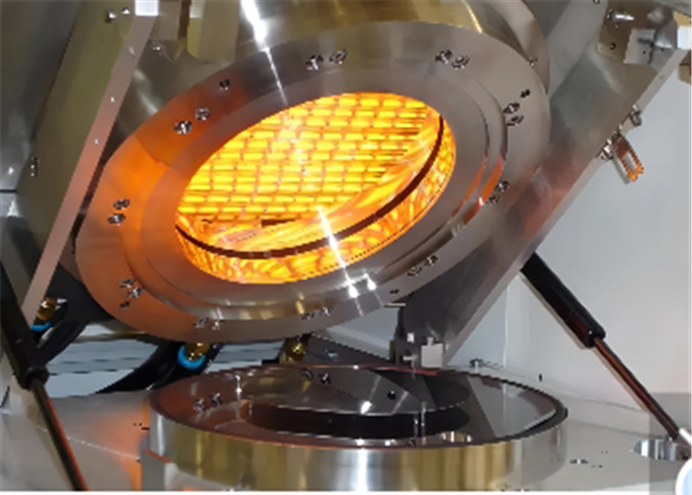
On the fab floor, one temperature excursion during photoresist processing and you can kiss an entire lot goodbye. Wafer count is fixed. Thermal budget is non-negotiable. There’s no room for guesswork. What matters, technically We zero in on the thermal nodes that actually drive lithography yield: photoresist soft bake, hard bake, and post-apply stabilization. Short-wave infrared heats fast, all the way through the film, so you cut down on solvent trapping and avoid skin-effect. And you hold wafer-level uniformity within ±0.1°C across the film. The emitters are built for cleanroom life—Class 1–100 compatible, with a mechanical layout that keeps particle generation at baseline. Repeatability is baked into the thermal loop: setpoints track with sub-second response, and bake profiles store and recall cleanly to match the recipe without drift. Why it works in practice In wafer drying and photoresist bake, you need heat you can count on, cycle after cycle, with nothing extra riding on it. Infrared trims the thermal mass overhead compared to hotplates, so ramp times shorten and energy draw drops—without hurting film quality. You end up with fewer reworks, tighter critical dimension control, and line-of-sight performance that holds up on 24/7 schedules. When the track keeps moving, the bake has to be consistent—every time, for every wafer. Here’s what to watch for Infrared is line-of-sight, and it cares about emitter-to-substrate distance, so integration tolerances matter. The system needs a defined standoff and clean quartz window paths—any contamination on the window becomes a direct source of thermal non-uniformity. Plan for tool-level alignment and routine window maintenance. Once those constraints are handled, the process window becomes predictable, and the thermal signature turns into a controllable variable instead of a risk you’re crossing your fingers on.